| REF | MAD-000625Q |
|---|
.(Name: Glypican 3 Antibody (Clone 1G12
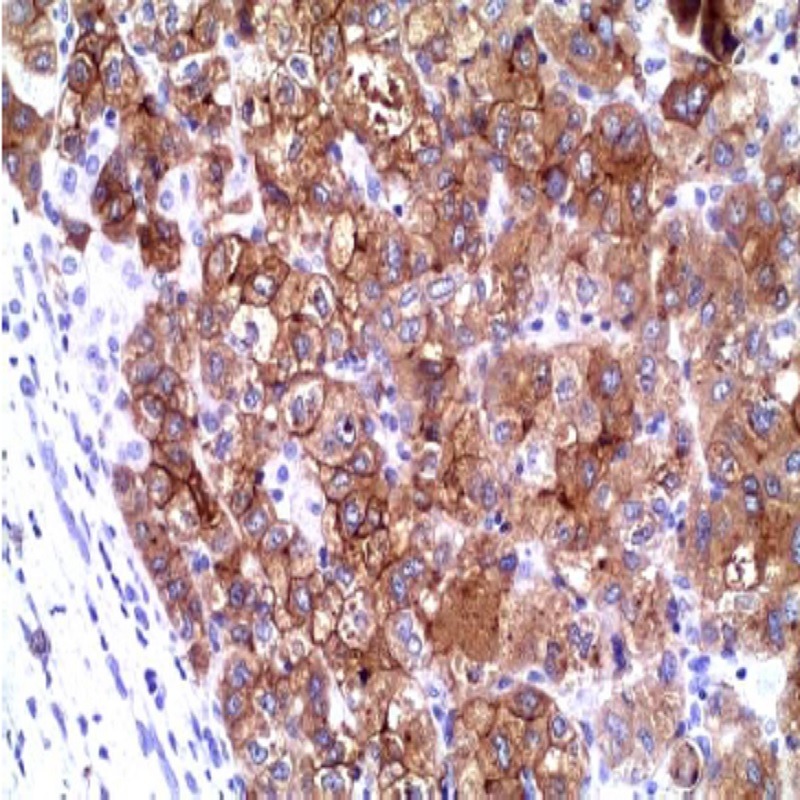
Description and applications: Glypican‐3 (GPC3) is a member of the glypican family of glycosyl phosphatidylinositol‐anchored cell‐surface heparin sulfate proteoglycans. The 1G12 monoclonal antibody has been used to assess GPC3 expression in malignant and nonmalignant liver tissue samples and for enzyme‐linked immunosorbent assay (ELISA) for detection of GPC3 in the serum. Studies have shown that GPC3 is expressed at the protein level in most HCCs, but it is undetectable in normal liver and benign hepatic lesions, including dysplastic and cirrhotic nodules. In addition, GPC3 is significantly elevated in the serum of a large proportion of patients with HCC. Based on these results, it has been proposed that GPC3 could be a useful marker to differentiate between benign and malignant liver diseases. The GPC3 is expressed in the great majority of the gonadal yolk sac tumors. The endodermal component of endometrial or ovarian endometrioid carcinoma cases with also show intense cytoplasmic and / or membrane positivity. It is positive in sporadic cases of choriocarcinoma and presents focal positivity in embryonal carcinomas and immature teratomas; is not expressed in seminomas an intratubular germ cell neoplasia. Isolated cases spermatocytic seminomas show weak positivity. Other tumors of gonadal origin that can express GPC3 are endometrioid, clear cell, mucinous or serous carcinomas. 80% of placental site trophoblastic tumors and 100% of uterine placental site nodules are also positive. In other no gynecological tumors, GPC3 is expressed to 23% of lung carcinomas (55% squamous cell carcinomas and only 8% of adenocarcinomas) and 3% of renal cell carcinomas (chromophobe carcinomas). Along with other markers such as E-cadherin (negative) and β-catenin (positive nuclear and cytoplasmic), GPC3 is a useful marker in the diagnosis of pseudopapillary solid tumors of the pancreas and helps the differential diagnosis of neuroendocrine tumors. 34.7% of rhabdomyosarcomas, more frequent embryonal type, show positivity for this antibody while other types of sarcomas arenegative. In a recent study, 52% of liposarcomas and 29% of melanomas have been positive. Varying percentages of other tumors of epithelial and mesenchymal have shown variable positivity, demonstrating the lack of specificity of this antibody and the need to analyze the results in context with other antibodies staining.
Composition: anti-human Glypican 3 mouse monoclonal antibody purified from serum and prepared in 10mM PBS, pH 7.4, with 0.2% BSA and 0.09% sodium azide.
Immunogen: Balb/C mice immunized with a single i.p. injection of 50 μg of a fragment containing the last 70 amino acids of the core protein
حجم موجود: 3 / 7 / 12 میلیلیتر
مورد استفاده: ایمونوهیستوشیمی روی بافت پارافین. بر روی بافتهای فروزن یا وسترن بلات تست نشده است.
کلون: 1G12
ایزوتایپ: Mouse IgG1
کنترل مثبت IHC: هپاتوکارسینوما ، جفت
قابلیت دیده شدن: سیتوپلاسم سلول و غشای سلول
روش پیشنهادی IHC:
شرایط نگهداری و پایداری : حداکثر 18 ماه؛ در دمای 2-8 درجه سانتیگراد نگهداری شود. فریز نشود.
این آنتیبادی متعلق به پنلهای تشخیصی DIGESTIVE، GYNECOPATHOLOGY و UROGENITAL است.